
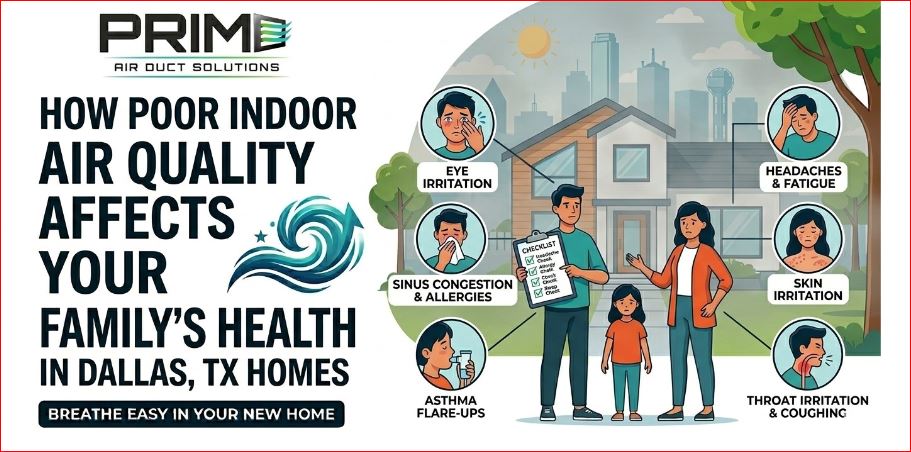
You can’t see it, smell it most of the time, or taste it — but the quality of the air inside your Dallas home has a direct and measurable effect on your family’s health every single day. Dust, allergens, mold spores, pet dander, volatile organic compounds, and combustion byproducts can build up inside your home’s air supply over months and years, and your HVAC system circulates all of it through every room continuously. For Dallas families dealing with unexplained allergy symptoms, persistent respiratory issues, or chronic fatigue indoors, poor indoor air quality is frequently the root cause that nobody has looked at yet.
This guide breaks down exactly how indoor air quality affects your family’s health — and what Dallas homeowners can do about it.
How Bad Is Indoor Air Quality in Dallas, TX?
Dallas sits in a region with some of the most challenging outdoor air quality conditions in the United States. The DFW metro regularly records high ozone levels, elevated particulate matter, and one of the longest and most intense allergy seasons in the country. Cedar fever alone — caused by mountain cedar pollen drifting in from Central Texas — affects hundreds of thousands of North Texans every winter.
But outdoor air quality is only part of the story. According to the Environmental Protection Agency (EPA), indoor air is typically 2 to 5 times more polluted than outdoor air. In tightly sealed, energy-efficient homes — increasingly common in newer DFW builds — that ratio can climb even higher. When outdoor allergens enter your home and get pulled into the HVAC system, they become trapped in your ductwork and recirculated indefinitely unless the system is professionally cleaned.
The Main Indoor Air Quality Threats in Dallas Homes
Dust and Particulate Matter
Dust is the most universal indoor air quality issue, and it’s far more than just a nuisance. Household dust is a complex mixture of dead skin cells, textile fibers, outdoor particulates, insect debris, and fine soil particles. Inside your HVAC ductwork, dust accumulates over years into thick layers that the system’s air filter simply cannot address.
Every time your AC or heat kicks on, disturbed dust particles from inside the ducts are pushed into your living space. For children, elderly family members, and anyone with a respiratory condition, this constant low-level particulate exposure has measurable health effects over time.
Mold Spores
Dallas’s humidity — particularly during spring and early summer — creates conditions where mold can establish itself inside HVAC ductwork, in bathroom walls, attic spaces, and crawl spaces. Once mold is present inside a duct system, its spores are distributed throughout the entire home continuously.
Mold exposure causes a wide range of health effects including nasal congestion, persistent cough, eye and skin irritation, and in people with mold allergies or asthma, significantly worsened respiratory symptoms. In cases of toxic black mold exposure, more serious systemic reactions can occur. If anyone in your household experiences symptoms that improve noticeably when they leave the home, mold is a strong suspect.
Our professional mold removal service locates and eliminates mold at the source — and our air duct cleaning removes contaminated buildup from the ductwork itself so spores stop circulating.
Pet Dander
Dallas is a pet-loving city, and pet dander is one of the most potent allergens found in residential HVAC systems. Unlike pet hair, which is visible and easier to clean, dander particles are microscopic and stay airborne for extended periods. They accumulate rapidly inside ductwork and can trigger allergic reactions in people who aren’t even aware they’re sensitive to animals — particularly if they’ve moved into a home where the previous owners had pets.
Volatile Organic Compounds (VOCs)
VOCs are chemical compounds released by common household products and building materials — paints, adhesives, new flooring, cleaning products, furniture, and air fresheners. In tightly sealed modern homes across DFW’s newer suburbs, VOCs can accumulate to levels that cause headaches, dizziness, throat irritation, and long-term respiratory effects. Adequate ventilation and clean ductwork are key to managing VOC levels in the home.
Combustion Byproducts
Homes with gas appliances — stoves, furnaces, water heaters, and fireplaces — produce combustion byproducts including carbon monoxide, nitrogen dioxide, and fine particulate matter. A well-maintained, properly vented system sends these byproducts outside. A dirty or blocked chimney, a poorly serviced furnace, or a clogged dryer vent can redirect these byproducts into the home’s air supply instead.
This is one reason why chimney cleaning and dryer vent cleaning are not just maintenance items — they’re direct factors in the air your family breathes every day.
Health Symptoms Linked to Poor Indoor Air Quality in Dallas Homes
Poor indoor air quality produces a wide range of symptoms that are frequently misdiagnosed or attributed to other causes. If you or your family members experience any of the following, and symptoms improve when you leave the home for extended periods, indoor air quality is likely a contributing factor:
- Chronic or seasonal allergies that seem worse indoors than outdoors
- Persistent cough or throat irritation with no clear medical cause
- Frequent headaches when spending time at home
- Eye irritation, watering, or redness that eases when away from the house
- Fatigue or difficulty concentrating while at home
- Worsening asthma symptoms despite proper medication management
- Skin irritation or rashes with no identified cause
- Infants or young children experiencing disproportionate respiratory symptoms
Children are particularly vulnerable to poor indoor air quality because their respiratory systems are still developing and they breathe proportionally more air per unit of body weight than adults. Dallas families with young children should treat indoor air quality as a priority — not an afterthought.
How Your HVAC System Affects Indoor Air Quality in Dallas
Your heating and cooling system is the primary distribution mechanism for everything in your home’s air — clean or contaminated. A few key components directly affect air quality:
Air Ducts
Dirty ductwork is the single largest contributor to poor indoor air quality in homes that haven’t had regular professional cleaning. Years of dust, allergen, pet dander, and debris buildup inside the ducts gets pushed into every room of the house during every cycle. In Dallas, where the AC runs for 8 to 9 months of the year, that’s a very high number of contaminated air cycles per household.
Air Filters
Standard 1-inch HVAC filters capture large particles but allow fine allergens, mold spores, and microscopic debris to pass through. Upgrading to a higher MERV-rated filter helps, but it only addresses what’s currently in the airstream — not the buildup already inside the ducts. Filter changes and professional duct cleaning work together, not as substitutes for each other.
Dryer Vents
A clogged dryer vent introduces excess moisture into your home’s environment, raising indoor humidity levels that accelerate dust mite growth and mold development. Keeping your dryer vent clean and clear is a direct indoor air quality measure, not just a fire safety one.
What Dallas Homeowners Can Do to Improve Indoor Air Quality
Improving your home’s indoor air quality doesn’t require expensive equipment or major renovations. These are the highest-impact actions for Dallas homeowners:
Schedule a professional air duct cleaning — this is the foundational step. Nothing else addresses the accumulated contamination inside your ductwork.
Have your dryer vent cleaned annually — removes moisture risk and one source of particulate recirculation.
Get a chimney inspection and cleaning if you have a fireplace — prevents combustion byproducts from entering your air supply.
Address any known moisture or mold issues — mold remediation removes a continuous source of airborne spores that affect respiratory health.
Replace HVAC filters regularly — every 1 to 3 months depending on filter type and household conditions.
Improve bathroom and kitchen ventilation — run exhaust fans consistently when cooking and showering to remove humidity at the source.
Reduce indoor chemical sources — choose low-VOC paints and cleaning products, air out new furniture, and avoid heavy use of aerosol air fresheners.
Frequently Asked Questions
How do I know if my Dallas home has an indoor air quality problem?
The most reliable indicators are health symptoms that improve when you spend time away from home, visible dust blowing from vents, persistent musty odors, or known moisture and mold history. A professional air duct inspection can give you a definitive picture of what’s inside your system.
Can air duct cleaning alone fix indoor air quality problems in Dallas?
Air duct cleaning is the most impactful single step, but a comprehensive approach also includes dryer vent cleaning, chimney maintenance if applicable, mold inspection if moisture issues exist, and regular filter changes. Our team can assess your home and recommend the right combination of services.
Are Dallas children more affected by poor indoor air quality than adults?
Yes. Children breathe more air relative to body weight, spend more time indoors, and have developing respiratory systems that are more vulnerable to irritants and allergens. Improving indoor air quality in a Dallas home with children is one of the most meaningful health investments a family can make.
How often should Dallas homeowners have their air ducts cleaned for health reasons?
Every 3 to 5 years is the standard recommendation, but homes with pets, allergy sufferers, recent renovations, or known moisture issues benefit from cleaning closer to the 3-year mark. Dallas’s long HVAC season accelerates buildup compared to cooler climates.
Does Prime Air Duct Solutions serve all of the DFW metro for indoor air quality services?
Yes. We serve Dallas and all surrounding cities including Euless, Mesquite, and the wider DFW area with air duct cleaning, dryer vent cleaning, chimney cleaning, and mold removal — all backed by 8+ years of certified experience and a satisfaction guarantee.
Your Family Deserves Clean Air in Your Dallas Home
Indoor air quality isn’t a topic that gets enough attention — until someone in the family starts struggling with symptoms that don’t have another clear explanation. The good news is that the most impactful improvements are straightforward, affordable, and long-lasting when done professionally.
Prime Air Duct Solutions is a family-owned, locally operated Dallas business dedicated to helping DFW families breathe cleaner, healthier air. We bring certified expertise, top-notch equipment, and honest pricing to every air duct cleaning, dryer vent cleaning, chimney cleaning, and mold removal job across the metro.
Schedule a 1:1 call with us today for a free estimate and let’s make the air inside your Dallas home as clean as it should be.
